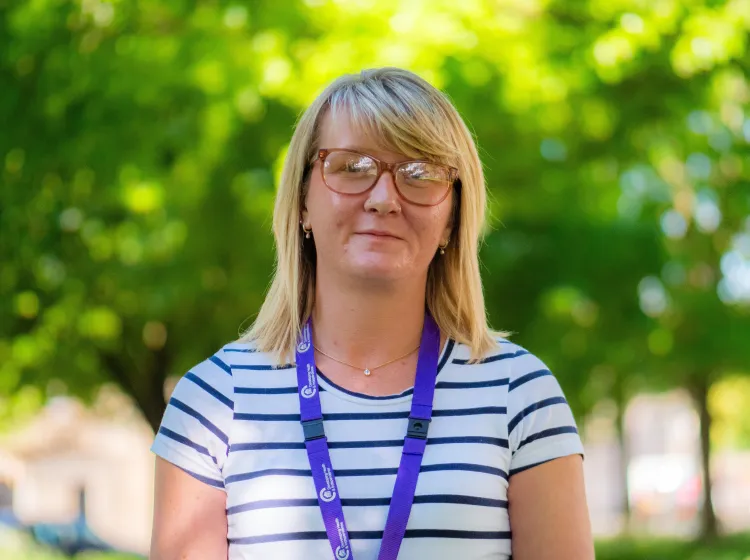
I was a typical working mum with a full-time job as a Senior Team Leader in healthcare. With two girls at primary school, a partner who also worked full time, and a home to run, I was busy, but life was good.
In 2017, I had a baby boy who passed away due to a rare condition. I was also very poorly after the birth and had to go on statutory sick pay. On top of struggling with the emotional toll of losing a child, I got into financial trouble. The bills started mounting up, as my income was no longer enough to pay my rent and outgoings.
I went to the local council, who told me they couldn’t help as I still had a job. I remember going to a pub, drinking a glass of wine, and calling work to resign. I was heartbroken. I felt I was losing everything.
After that, my drinking spiralled. My partner and I started arguing and eventually split up.
I am the type of person who needs to be busy – my job had been fast-paced and interesting. Now I was at home on my own while my girls were at school, with nothing to think about but what I had lost. I started going to a pub during the day, where I would talk to the landlady and tell her all my troubles, just so I wouldn’t be alone.
I became very unwell, mentally and physically. I had a stroke and temporarily lost feeling in my left side. I started having crippling headaches and regular seizures.
I came to DHI in June 2024. Initially, I wanted help to cut down my drinking, but the more I learned, the more I realised I needed to stop. One day, one of my daughters said: “Mum, I don’t like you when you drink.” That stopped me in my tracks. I realised that, although I was with my kids, I wasn’t truly present. I knew then that things had to change.
Becoming a Peer
I became a Peer at DHI, and it was life-changing. I’m very much a leader, and I found that I loved facilitating groups – I even set up several new ones, including a women’s group and a wellbeing group. It made me feel empowered. There’s an adrenaline rush when you help someone and see a change in them. I knew I had contributed to that change, and it felt amazing.
I began to understand my addiction and that it wasn’t a choice. The skills I gained from learning about CBT and SMART Recovery mean I now understand my triggers and have a toolkit to help me manage them.
I treated my Peer work as a full-time job. I’d get to the hub early, make teas and coffees, and get everything set up for groups. The other Peers became my best friends – Dale, Chris, Lee and I still regularly meet up for cups of tea.
When a Support Worker role at DHI, working across its supported housing, came up, I jumped at the chance. But I couldn’t have done it without the support of the other Peers – Dale even looks after my dog while I’m at work now.
I’d definitely advise others who are where I was to become Peers. It opens up a new support network and you will learn so much. It helps being on the other side, co-facilitating a group. I learned a great deal from Recovery and Mental Health and Wellbeing Practitioners Caitlin and Lizzie.
I love my new job, based at DHI’s Burlington Street supported housing. When I tell our residents that I’m in recovery, it helps them to know that I’ve been where they are. Lived experience is crucial. I can tell when someone’s having a bad day. I’ll knock on their door and ask if they want to go for a coffee, helping them get out of their own head.
It’s like I’ve opened a brand-new notebook and started a fresh chapter. I feel like I’m 18 again. My health is so much better – the headaches and panic attacks have stopped. I’m engaged to be married – my partner doesn’t drink, and we never would have got together while I was drinking. I’m planning to do a master’s degree in psychology through the Open University.
DHI brought love back into my life – from my family, friends and the Peers. If it wasn’t for DHI, I wouldn’t have the love I have now.
Click here to find out more about DHI's South Gloucestershire Drug and Alcohol Recovery Service.
Get news from Developing Health & Independence in your inbox. See our privacy policy.