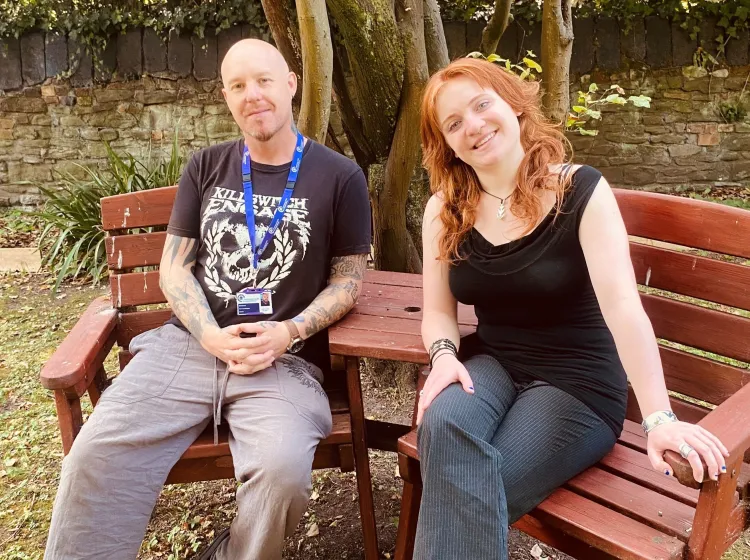
Oli Dawes and Hannah Thompsett are the Peer Coordinators for DHI's innovative new Smokefree Peer Support Programme, helping people across Bristol, North Somerset and South Gloucestershire (BNSSG) to stop smoking.
"I'd like to think we've got a great balance in our team," says Oli. "Hannah brings vibrant energy and a Master's degree in Psychology."
"And Oli has years of experience working in support services, so he's incredibly knowledgeable," says Hannah. "We're constantly learning from each other."
We spoke to Hannah and Oli about the new programme – funded by the NHS BNSGG Integrated Care Board. They tell us what makes it different and the role Peer Supporters will play in helping people become smokefree.
Tell us a bit about the Smokefree Peer Support Service and its aims. What’s exciting and different about its approach?
Hannah: The Smokefree Peer Support Service will help people to quit smoking by using Peer Supporters and taking a non-judgemental, achievable approach to behaviour change. We know that smoking is one of the hardest habits to break.
People with lived experience are often more empathetic because they understand the challenges involved. They can build stronger connections with clients through shared experience than someone who has never smoked. They know first-hand what it's like to try to quit and overcome those barriers.
The peer approach will complement existing tools and NHS stop smoking services. By taking a person-centred approach, we can reach people who might not otherwise engage and who benefit from support from someone who understands their community and experiences. This is the first time a peer approach has been used within a smoking cessation service in this way, so it's really exciting.
What stage are you at now?
Oli: At the moment, we're recruiting people to become Peer Supporters. It’s a new project so we're building it from the ground up. We’ve had a lot of interest so far.
This week, for example, I've been visiting community venues and talking to people at homelessness services and food banks across Bristol. I've been asking people whether they've quit smoking or are currently vaping, as the NHS recognises vaping as significantly less harmful than smoking and one of the most effective tools for helping people quit.
When we have enough Peers, we’ll start recruiting clients to the service. But while I've been recruiting peers, I've already met people who want to become clients!
What is a Peer? What qualities and experiences are you looking for when recruiting?
Hannah: A Peer is someone who uses their own lived experience to understand where another person is on their journey and provide support, encouragement and practical insights into the challenges they may face.
We're looking for people who are empathetic, reliable and attentive. Above all, they need to have a genuine desire to help others.
The people we support often face multiple challenges, not just smoking. There can be mental health, social, housing or financial issues alongside that. We're looking for people who understand this and who can help foster positive attitudes and hope for change.
What kind of activities will Peers be doing?
Oli: Peer Supporters will be involved in one-to-one support, group work and coaching. We'll provide training, ongoing support and supervision to help them develop these skills.
As Peer Coordinators, Hannah and I will be helping to design and shape the programme, alongside the Peers. The training will link closely with existing NHS and community services, including nicotine replacement therapy and stop smoking support.
We're building the training programme at the moment, and it's exciting to see the service develop and evolve with input from both Peer Supporters and clients.
How will the Peers benefit?
Oli: It's a chance for people to give something back to their community. It will also enhance their CV and provide valuable experience. They’ll get the chance be part of DHI’s Peer Academy, which offers accredited training and skills development. For some people, it could be a great stepping stone into recovery work, health and wellbeing roles, or wider community-based support work.
Hannah: It's also an opportunity for Peer Supporters to gain confidence and develop new skills. They'll build valuable social connections and become part of a supportive community.
Ultimately, it's about creating hope, belonging, personal development and opportunities for growth.
What would you say to someone who is interested but isn't sure they have enough experience or confidence?
Hannah: It's important to remember that volunteering opportunities will be tailored around the Peer Supporter. If someone feels nervous about facilitating a group, there are other options such as one-to-one support or telephone-based work.
Oli: For example, I spoke to a wheelchair user recently who asked how the role could work for them. I explained that they could choose to support people over the phone if that felt most comfortable and accessible. It's about finding a role that works for the individual and playing to their strengths.
If someone is nervous or unsure about what to do, that's exactly why Hannah and I are here as Peer Coordinators. We'll provide support every step of the way and help people build their confidence as they grow into the role.
And finally... tell us something surprising about yourself!
Hannah: When I was younger, I had a natural talent for sprinting and competed in the 100m and 200m. I was even scouted by an athletics organisation. I gave it up when I was a teenager, but I still wonder what might have been every time the Olympics are on!
Oli: I've written three books. They're mainly psychological thrillers because I'm fascinated by human behaviour and the human condition. I try to write a few pages every day, and I'm currently hoping to get my latest novel – about a complicated family – published. It would make a great film!
If you’re interested in becoming a Smokefree Peer, email Oli and Hannah: smokefree@dhi-online.org.uk
Get news from Developing Health & Independence in your inbox. See our privacy policy.