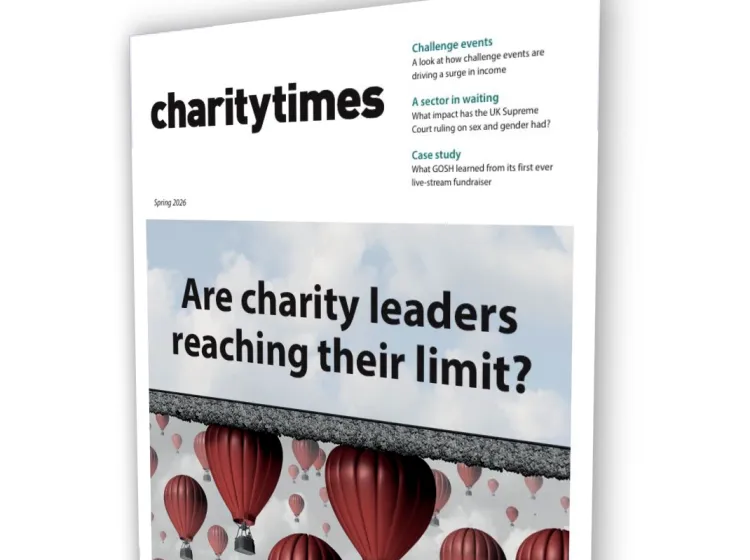
DHI's Chief Executive Rosie Phillips has written a thought leadership piece for the Spring issue of Charity Times (p40), in which she challenges charities to move beyond symbolic involvement by creating cultures that trust, empower and learn from people with lived experience. Here's the article in full:
The story of Jeremy Palmer, a former client of Developing Health & Independence (DHI), recently went viral. Jeremy is now our supported housing team leader, running the service he once relied on.
The story resonated because it shows that change is possible and because of its powerful twist. Across the sector, ‘lived experience’ has become a familiar term. Yet too often it is symbolic. People are invited to share their stories, but rarely empowered to shape decisions or influence where power sits.
Moving beyond tokenism requires resources, transparency, trust and a willingness to tolerate some risk. Crucially, it must be driven from the very top. Without visible leadership commitment, lived experience becomes an add-on rather than a core principle.
I do not have lived experience of the services DHI provides. That reality has shaped my approach. Rather than trying to speak for people, I have been intentional about ensuring lived experience sits around me through governance, leadership and organisational culture.
Lived experience is perhaps in DHI’s DNA. Our organisational roots lie in Bath Self-Help housing association, which was founded on the principles of mutual aid and collective action. The model was grounded in the direct experience of people excluded from conventional housing systems.
At DHI, our values explicitly support meaningful involvement from people with lived experience: Self Direction, Zest for Life and Stimulation. These are not just aspirational words on a wall.
For me, stimulation is especially relevant. Fundamentally, it is about learning. Learning requires challenge, reflection – and sometimes mistakes. We are told we learn from failure, yet in the public and charity sectors there is little tolerance for it.
A step in moving beyond tokenism is therefore cultural. Rather than removing all risk from lived experience involvement, we need environments where mistakes are accepted and learning is expected. This starts with clear expectations and boundaries, but once these are in place, organisations must trust people to take ownership.
This is not an argument for recklessness. Safeguarding remains essential, but it
should enable participation, not shut it down. When fear of risk dominates, it reinforces the power imbalances we claim to challenge.
I recently sat down with our peers – service users with lived experience who are trained and supported to help our clients – to ask what works. Trust, training and DHI’s non-hierarchical culture were key.
“For example, we know weekends can be trigger points for relapse, so we were empowered to set up a Prep for the Weekend group which runs every Friday,” said one peer.
Responding to feedback creates a virtuous circle of trust, building confidence and helping us improve. Lived experience is represented on our board – but we don’t rely on these trustees to speak for all service users; instead, assurance that we have listened widely comes through our User Voices group, which is open to all service users and peers and reports directly to the board. Its purpose is to hear the widest possible range of experiences and ensure that insight shapes service development and decision-making.
None of this has happened by accident. We have invested in lived experience leadership, supported by trust funders and by embedding peer involvement into service tenders. This investment reflects a belief that lived experience is not an optional extra or a reputational asset. When embedded properly it strengthens accountability, improves outcomes and makes charities better at the services they exist to provide
Get news from Developing Health & Independence in your inbox. See our privacy policy.